
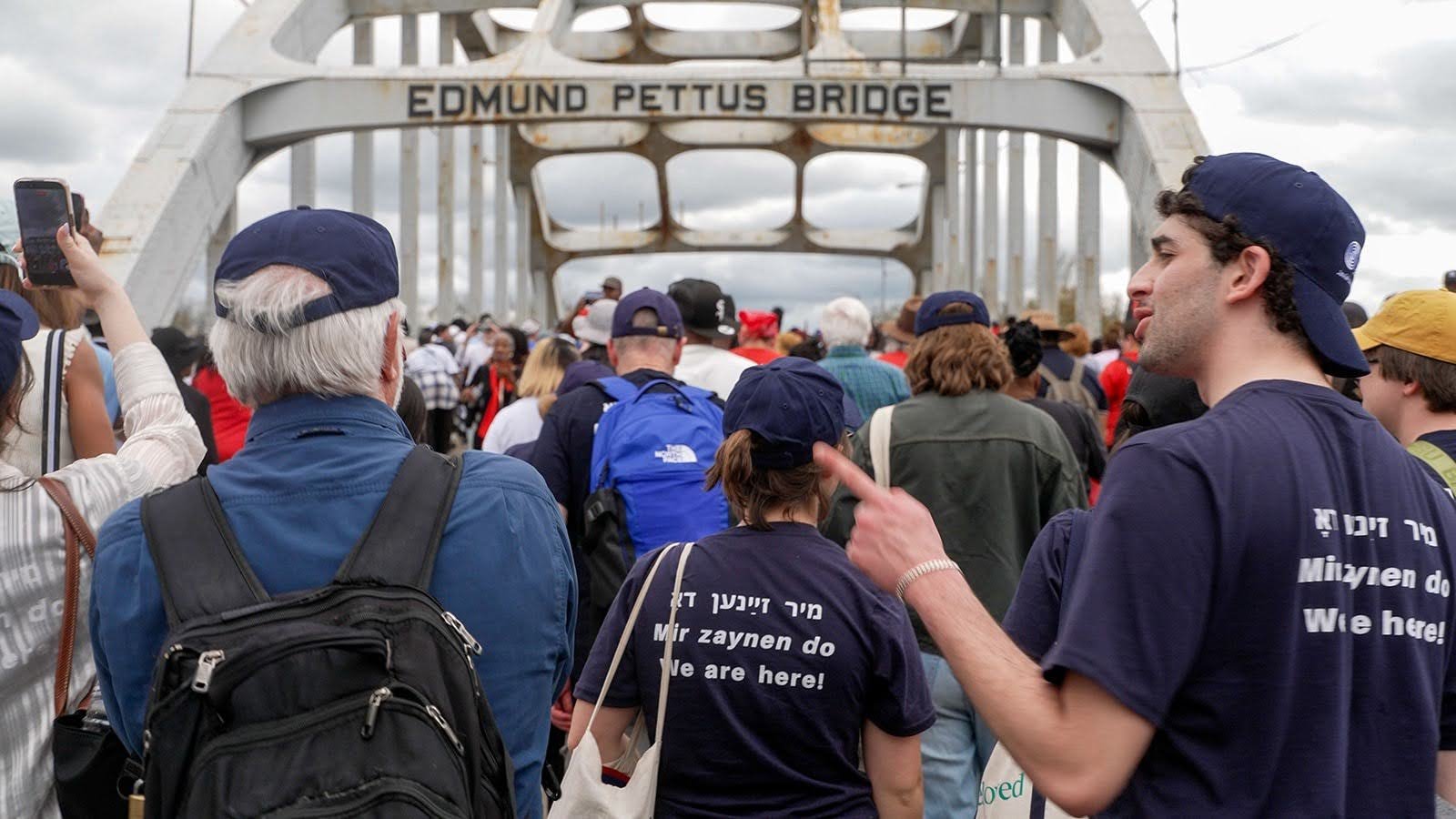
Photo credit: Jay Mallin, 2026
Return to Selma with the Workers Circle
March 4–8, 2027
Imagine Selma, where every street corner echoes with history. Selma is more than just a location; it's a symbol of resilience, change, and the ongoing pursuit of justice.
In the heart of the voting rights movement and the final stop of the civil rights journey, Selma holds a special place in our collective memory, where ordinary people stood up for extraordinary change, altering the course of history forever.
In 1965, Workers Circle leaders stood on the frontlines of history, marching shoulder-to-shoulder with John Lewis, Dr. Martin Luther King Jr., and Amelia Boynton and hundreds of other marchers from Selma to Montgomery.
So, mark your calendars and prepare to join us in Selma for the 62nd Selma Bridge Crossing, Jubilee, March 4–8, 2027. This isn't just an event; it's a pilgrimage to the place where American Democracy was reborn.
In this moment when our democracy is under sustained attack, the lessons of Selma resonate with urgency and power.
Spend time in conversation with the people of Selma about then and now
Learn from Workers Circle’s scholars in residence
Partake in Selma Jubilee educational events that bring together civil rights leaders from around the country and grassroots activists from across the nation. Watch the Workers Circle’s Panel Conversation “History Is Now,” held in the Dallas County Courthouse during the 61st Jubilee, featuring Alan Resse (F.D. Reese Foundation), Lilian Kshensky Baxter (King Center for Nonviolence), and Collins Pettaway III (Selma Democracy Center), moderated by Noelle Damico (Workers Circle).
Visit the Equal Justice Initiative’s Legacy Museum and the National Memorial for Peace and Justice in Montgomery
Walk in the footsteps of history over the Edmund Pettus Bridge
Get connected to work for civil rights and voting rights all year round with our partners in Selma and beyond
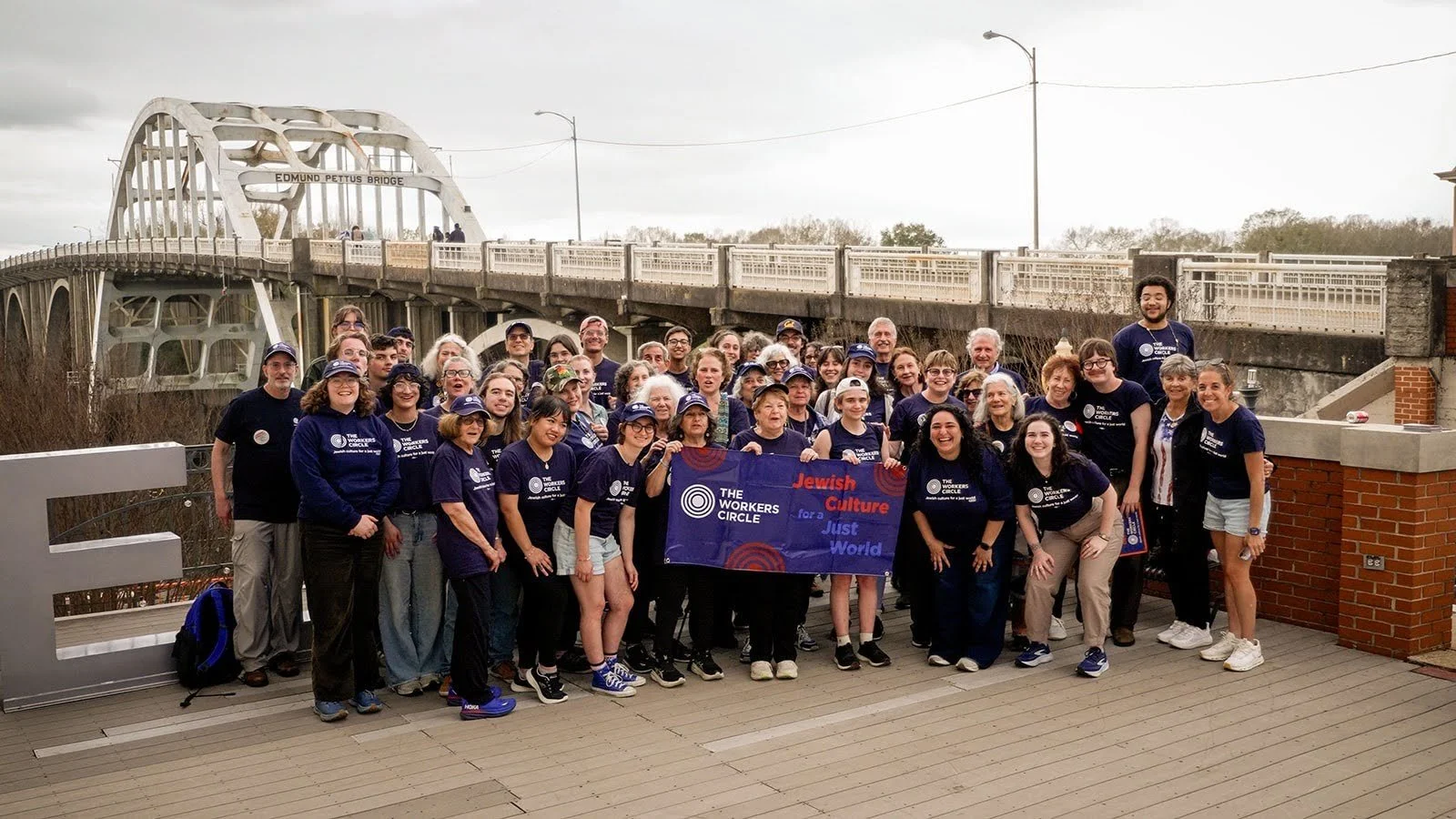
Photo credit: Jay Mallin, 2026
We will have a general delegation and a young adult delegation. General delegation members will cover their own expenses. The 25 young workers and students (ages 18–29) in the young adult delegation will have all costs of the trip covered by the Workers Circle to enable their learning and participation.
Sign Up to Join Us
The HistorY
On March 7, 1965 John Lewis, Hosea Williams, Amelia Boynton, and civil rights activists from the Selma region amassed at Brown Memorial Chapel, marched through Selma and across the Edmund Pettus Bridge. Marchers were protesting the police killing of Jimmie Lee Jackson, who died protecting his mother as police attacked a peaceful civil rights march in nearby Marion, AL in late February. Civil rights activists determined they’d march from Selma to Montgomery to bring their demands to the Alabama state capitol.
As they crossed the bridge, state police were waiting on horseback and on foot, dressed in riot gear. At the foot of the bridge were the press, filming as the marchers paused to pray and were met with violence force as AL State police beat them with bullwhips and batons wrapped in barbed wire, charged with horses, and tear gassed them, barely escaping with their lives. National television news broadcast the brutal attack and it pricked the conscience of the nation.
Dr. King, who watched what came to be known as “Bloody Sunday” from Atlanta, then put out a call for leaders of faith and conscience to come to Selma the following week and continue that march. Among them were Irving Gordon, an optician who served as Chairman of the Atlanta Workers Circle and the entire Southern Region of the Workers Circle, as well as Workers Circle members and youth joined the march from Selma to Montgomery.
These actions in Selma crystallized the countless acts of courage, nonviolence, and sacrifice by civil rights activists across the country, and propelled the Johnson Administration to craft and the Congress to pass the Voting Rights Act of 1965 in August of that year.